We’ve all experienced this dreaded moment. You’re already late, get inside your car, insert the key, and nothing. Just a “click-click-click” noise or complete silence. But here’s the bright side: you might not need to spend some cash for a new battery by calling a tow truck just yet. You can fix a flat car battery yourself with this simple step-by-step guide.
What Are the Common Causes of a Flat Car Battery?
- The Human Error: Winding down instead of turning off your headlight, as well as your habit of not closing your car door completely, could be a potential cause that may drain your battery in ways you would never suspect.
- Hidden Power Hogs: Cars today resemble a smartphone. Even if the car is turned off, various sensors are still consuming the car’s battery.
- Old Age: At some point, the battery’s chemistry diminishes. Three years (approx.) is the minimum lifespan for a battery.
Step-by-Step Solution to Diagnose and Solve Flat Car Batteries
To fix a car battery yourself, follow the following steps:
- Visually Inspect the Battery
Check the battery by opening the hood. Do the metal posts have a lot of white or blue crusty material surrounding them? That is corrosion, and it prevents electricity from getting to your engine like a wall.
Additionally, tug a little on the cables. They are not establishing a strong bond if they rotate or wiggle. Finally, examine the battery’s sides; if they appear “bloated” or swollen, there is probably interior damage.
- Test Battery Voltage with a Multimeter
A multimeter is actually a tool that can be used to measure the value of the electrical pressure. Attach the red probe to the positive terminal and the black probe to the negative terminal of the battery. The voltage reading you get means the following things:
- 12.6V: Your battery is completely okay.
- 12.2V: It’s about half-full.
- Less than 10V: It is seriously troubled—either empty or busted.
This is the traditional boost. You just need a neighbor’s automobile and jumper cables.
How to Jump-Start Your Car Safely?
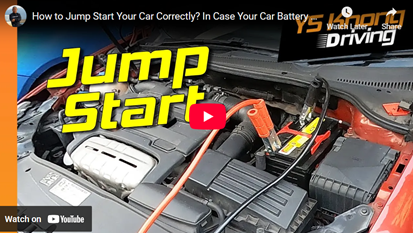
Follow this particular order to prevent any sparks:
- Red to Dead: Clip the red cable to the (+) side of the dead battery.
- Red to Good: Connect the other red lead to the (+) of the good battery.
- Black to Metal: The final black cable connection is to a metal bolt or bracket on your car engine, other than the battery.
- Start & Wait: Start the good car and wait for a few minutes. Then start your own car.
- Take them off in the exact opposite order.
Recharge with a Smart Charger
A jump start will get you going, but it won’t “fix” your battery. It’s like a shot of espresso – at some point, you’d better have had a full night’s sleep. Use a smart charger on your car at home. It will hook into a wall outlet and charge your battery in 12-24 hours, which is a lot better than trying to charge it when driving your car.
Check the Alternator
Your alternator is most likely damaged if you install a new battery and it dies again two days later. The alternator is a little motor that produces energy by means of a belt.
Turning on your headlights when parked at night is a simple “old school” test. Replace the alternator if the headlights are dim or flickering.
Recharging with Distilled Water
If your battery is drying out because of evaporation of its liquid, you may be able to revive it by topping it off with some distilled water. In this way, you are resubmerging your lead plates.
What You Will Need
- A funnel, safety gloves, and distilled water (Do not use tap water; it will damage the cell tissues)
The Process:
- Open the Cells: Use a screwdriver to remove the vent caps on the top of the battery.
- Inspect Levels: Look inside each cell. The lead plates should not be exposed to the air, or else they won’t be able to hold a charge.
- Refill Carefully: Use a funnel to fill with distilled water until it covers the plates (about 1/8 inch above plates). Do not fill any 1/8 inch above plates. The water will expand when charging.
- Charge: Put the caps and either charge the batteries slowly or drive the vehicle for 30 minutes to create a mixture of the acidic and new water components.
- Replace the Battery if Necessary
Batteries don’t last forever. The majority only live for three to five years. The lead plates inside your old battery are probably worn out if it continues to die even after you charge it. At that point, get a new one to save yourself the trouble.
Battery Health and Diagnosis Reference
The following table will give you an idea that if you need to replace or recharge the battery:
| Battery Status | Voltage Reading (Engine Off) | Voltage Reading (Engine On) | Common Symptoms | Recommended Action |
| Healthy & Charged | 12.6 V to 12.8 V | 13.5 V to 14.5 V | Car starts instantly; bright headlights. | None; maintain regular driving. |
| Low / Flat | 12.0 V to 12.3 V | 13.5 V+ | Slow cranking; dim interior lights. | Recharge with a smart charger. |
| Deeply Discharged | 10.5 V to 11.9 V | Variable | Rapid clicking sound; dash lights flicker. | Jump-start and perform a long-cycle charge. |
| Dead / Damaged | Below 10.0 V | Below 13.0 V | No lights at all; the battery case may look swollen. | Replace the battery immediately. |
| Alternator Failure | 12.6 V | Below 13.0 V | The battery icon on the dashboard and the car dies while driving. | Replace Alternator |
Professional Solutions for a Flat Car Battery
If your car doesn’t start and you think it is because the battery is dead, it may be more reasonable to seek professional services. Today’s cars, and those with start-stop systems and computer systems, could be permanently damaged from incorrect jump charging.
Why Choose Professional Battery Support?
Although it may appear faster and easier to jump-start a car yourself, there are several benefits of hiring a professional service that extend far beyond just being able to start your engine:
- Advanced Diagnostics: Technicians employ the use of advanced battery testers to assess whether your battery merely needs a recharge or, in actuality, needs to be replaced.
- Safe Procedures: Batteries are handled with care by the experts, avoiding electrical surges that could destroy the Engine Control Unit or any other electrical component in your car.
- Coding and Registration: Contemporary vehicles (models from 2015 onwards) have the requirement of “coding” the new battery to the car’s computer system. An expert will do all this for you with regard to coding.
How Can You Access Professional Help?
Consider the following options:
Roadside Assistance: These services, such as the RAC and AA, are the standard. You don’t have to be a member; most of them offer “pay-on-use” car services for non-members who are currently stranded.
Mobile Mechanics: Using apps or by phone, you can book a local professional for a visit at home or the office. Most of the services have 30-60-minute response times in urban areas.
Manufacturer Recovery: Most manufacturers, Ford, BMW, VW, for example, will still provide free roadside assistance if your car is still in warranty, and this will cover battery faults.
Local Specialized Garages: If the car can be moved safely, most of the battery centers will offer free health diagnoses to determine whether the problem lies in the battery, the starter motor, or the alternator.
Comparison of Repair Options
Consider the following differences in the features of battery repair options:
| Feature | DIY Jump Start | Smart Charger | Professional Replacement |
| Cost | Free (if you own cables) | $40 – $100 | $150 – $300 |
| Time Required | 10 Minutes | 8 – 24 Hours | 30 Minutes |
| Longevity | Temporary Band-Aid | Good for seasonal health | 3 – 6 years of peace of mind |
| Best For | Emergencies | Infrequent drivers | Old or damaged batteries |
Frequently Asked Questions
Can the utilization of a portable jump starter be safer compared to jumper cables? Yes! Portable “power banks” are amazing because they usually include built-in safety chips that avoid sparks in case one happens to touch the cables together.
Why does my car battery go flat even when it is parked overnight? This is usually a “parasitic draw.” It means something—such as a trunk light that won’t turn off—is secretly eating power while you sleep.
Can starting issues be caused by a loose battery terminal? Of course. The energy cannot “jump” the gap to start your car if the metal ring on the battery post is not snug. Always start by checking for tightness!