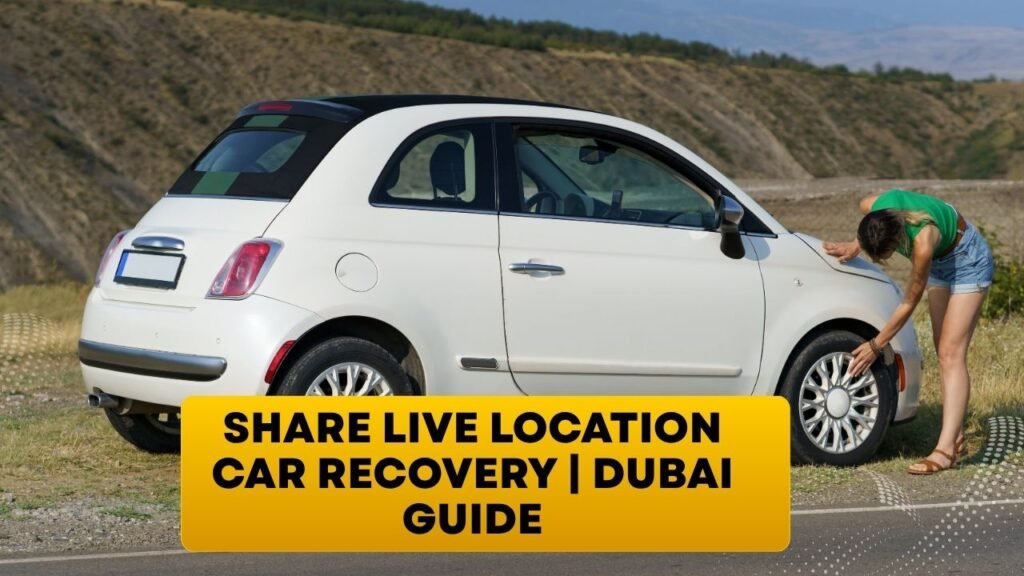
When your vehicle breaks down, telling a car recovery team where you are can be harder than it sounds. Knowing how to share live location car recovery teams can actually use may save valuable time and help the driver reach you without unnecessary searching.
A written address is not always enough in Dubai for getting a fast car recovery. Roads in Dubai are difficult to understand as each road can have multiple entrances, service lanes, parking areas and nearby landmarks that make your exact position difficult to identify. A GPS location gives the recovery team a much clearer starting point.
Why share live location car recovery

Is Better Than a Written Address
A street address may tell a recovery driver the general area, but it does not always show exactly where your vehicle is standing. You could be beside a particular exit, on a service road, inside a parking area or several metres away from the location shown on an address.
A GPS pin provides a precise point on a map. This can be especially useful when you are on a major road or in an unfamiliar part of Dubai.
For recovery companies, accurate location information also makes dispatch easier. The driver can plan the route before reaching the area instead of calling repeatedly to ask where the vehicle is.
This is why learning to share live location car recovery teams can access quickly is one of the simplest ways to improve the recovery process.
1. How to Share Your Live Location on WhatsApp
WhatsApp is one of the easiest options when you need roadside assistance because many drivers already have it installed on their phones.
Open the conversation with the recovery company and select the attachment option. Choose location and then select the option to share your live location. You can choose how long you want your location to remain active before sending it.
Once the location has been sent, the recovery team can view your position through the map and use it to navigate toward you.
Before sending it, make sure your phone has location services enabled. If the location appears inaccurate, move somewhere with a clearer view of the sky if it is safe to do so and allow your phone a moment to update its position.
2. A One Time GPS Pin Can Also Help
You do not always need to send a continuously updating location. If your vehicle is safely parked and you are not moving, a standard location pin may be enough.
A one time pin tells the recovery driver where you are at the moment you send it. This is useful when you have already stopped and your position is unlikely to change.
Live location becomes more useful when you are walking to a safer area, when your vehicle is being moved, or when your exact position may change.
The important thing is accuracy. Whether you send a live location or a standard GPS pin, check that the marker is actually placed where your vehicle is located.
3. Add a Landmark Alongside Your Location
Technology is extremely useful, but it should not be your only method of communication. A landmark can give the recovery driver an additional reference point if the GPS position is slightly inaccurate.
Tell the dispatcher about a nearby petrol station, building, exit, bridge, parking entrance or road sign. If you are on a highway, mention the direction you were travelling and the nearest exit or interchange.
For example, saying that you are on a particular road near a specific exit gives the driver more information than simply saying you are somewhere in Dubai.
Using both GPS and a landmark makes it easier to share live location car recovery teams can verify when they approach the area.
4. What If You Have No Mobile Signal?
A weak signal can make an already stressful breakdown more difficult. If your phone cannot send a location immediately, do not panic.
Try moving to a safe position where the signal may improve. If you are travelling with another person, check whether their phone has better reception.
You can also prepare a location screenshot if the map has already identified your position. Send it as soon as the connection becomes available.
If you cannot communicate digitally, use nearby road signs, route numbers, landmarks and visible buildings to describe your position to the dispatcher.
Your phone battery is also extremely important during a breakdown. Avoid unnecessary calls, videos and applications while waiting for assistance. If your battery is low, activate power saving mode and keep the phone available for communication.
5. Give the Dispatcher More Than Just Your Location
A GPS pin tells the recovery driver where you are, but additional information tells them what they are coming to handle.
Tell the dispatcher your vehicle make and model, the colour of the vehicle and the problem you are experiencing. Explain whether the car has stopped completely or can still move safely.
If you have a flat tyre, dead battery, overheating problem or accident damage, mention it clearly. This allows the company to determine what type of assistance or recovery vehicle may be required.
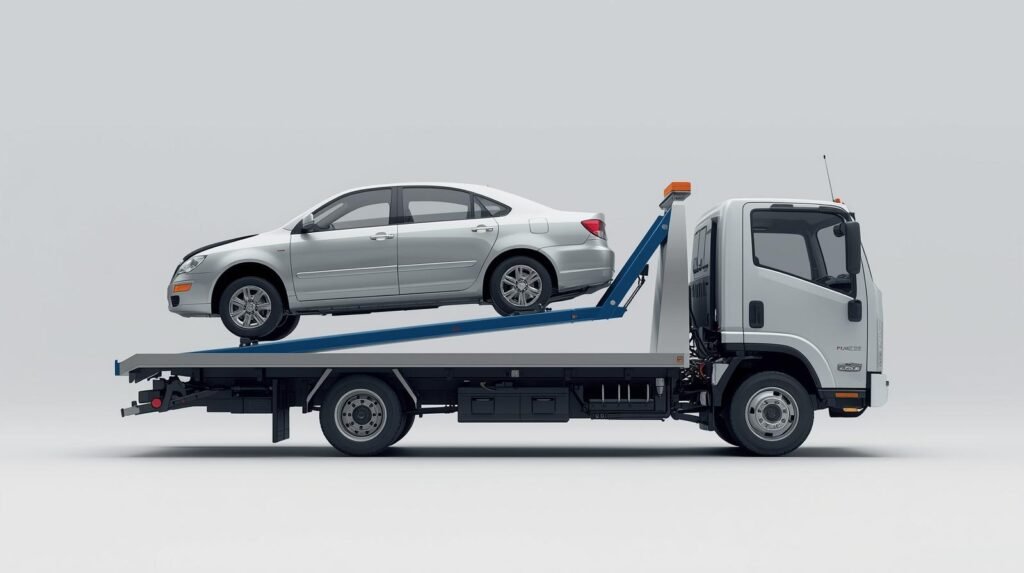
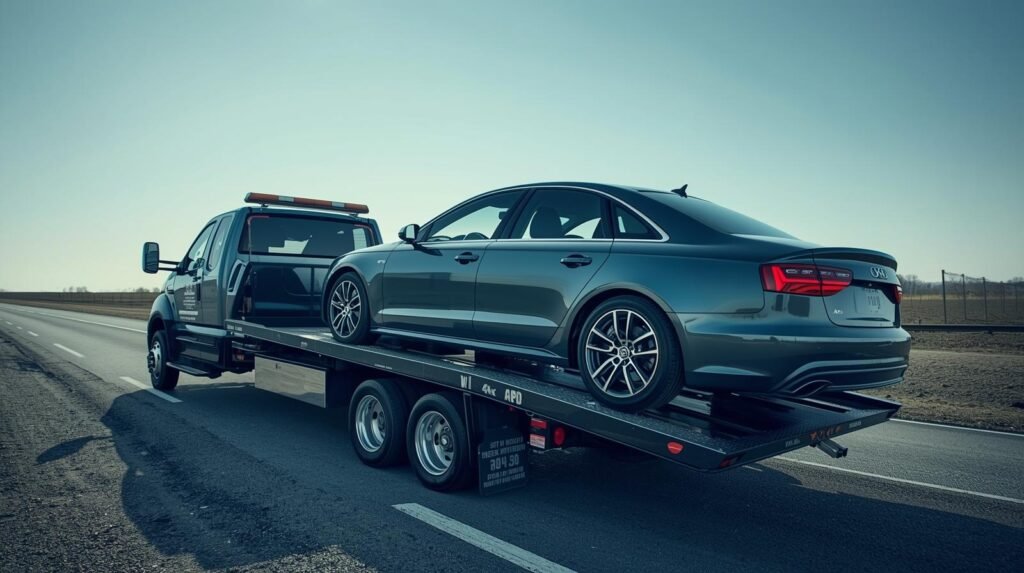
For example, a vehicle that cannot move may need a flatbed recovery truck, while another breakdown may only require roadside assistance.
Accurate information at the beginning can prevent delays caused by sending unsuitable equipment.
Why GPS Accuracy Matters in Dubai
Dubai has a mixture of highways, residential communities, service roads, parking structures and large developments. Two locations can sometimes appear close on a map while requiring completely different routes to reach.
Large communities can also have multiple gates and access points. A recovery driver may arrive at the correct development but still need to know which entrance leads to your vehicle.
This is another reason to share live location car recovery teams can follow rather than relying only on a building name or general address.
If you are inside a parking structure, provide the floor and section whenever possible. If you are outside a shopping centre or hotel, mention the entrance or nearby landmark.
What to Do If Your Car Breaks Down on a Highway
Highway breakdowns require extra attention because vehicles may be travelling at high speeds nearby. If possible, move the vehicle to a safe position away from moving traffic.
Turn on your hazard lights and remain in a safe location while waiting for help. Do not stand unnecessarily close to traffic or attempt to walk along a busy road simply to improve your phone signal.
When contacting recovery, provide the road name, direction of travel, nearest exit and any visible road marker. Then send your GPS location.
The combination of these details can help the recovery driver identify your position much faster than any single piece of information.
How to Make Your Location Easier to Find
There are a few simple habits that can make a major difference.
First, keep your phone charged when travelling. A charging cable or power bank can be extremely useful during an unexpected breakdown.
Second, keep location services available. Turning them off can make it harder to provide an accurate position when you need assistance.
Third, save the contact details of a trusted recovery provider before an emergency happens. Searching for a company while standing beside a disabled vehicle can add unnecessary stress.
Finally, practise sending a GPS location to a friend or family member. Knowing where the feature is before you need it can save time during a real emergency.
Common Location Sharing Mistakes
One common mistake is sending a location without checking whether the marker is correct. If your phone has not updated your position, the pin could be several metres or more away from the actual vehicle.
Another mistake is giving only a general area. Saying you are near a famous landmark may not help if there are several roads and entrances nearby.
Drivers sometimes also forget to mention their direction of travel on highways. This can make it difficult for a recovery truck to know which side of the road to approach.
If you share live location car recovery teams can use alongside a road name, direction and landmark, the driver has several ways to confirm your position.
What Recovery Drivers Need From You
The recovery driver needs enough information to reach you safely and bring the right equipment.
Your location should be the first priority. After that, provide information about the vehicle, the breakdown and any unusual circumstances.
If the car is in a dangerous position, tell the dispatcher immediately. If you are carrying children, elderly passengers or someone who needs assistance, mention that as well so the situation can be assessed appropriately.
Clear communication does not guarantee an instant arrival, especially during heavy traffic, but it can prevent avoidable delays.
Final Thoughts
Knowing how to share live location car recovery teams can accurately follow is a simple skill that every Dubai driver should understand. A GPS pin is usually more useful than a written address, while a nearby landmark and road details provide valuable backup information.
WhatsApp makes location sharing particularly convenient, but you should also know what to do when your signal is weak or your phone battery is running low.
The most important thing is to communicate clearly. Send your location, explain exactly where the vehicle is, describe the problem and stay available for calls from the recovery team.
A few seconds spent sharing the right information can make the recovery process smoother and help the driver find you without unnecessary delays.
Frequently Asked Questions
1. How do I share live location car recovery teams can use?
Open WhatsApp, enter the conversation with the recovery company and select the location option. Choose live location and send it to the dispatcher. Make sure your phone has location services enabled before sending it.
2. Is a GPS pin better than giving my address?
In many situations, yes. A GPS pin can show the exact position of your vehicle when a written address only identifies a general area. Adding a nearby landmark or road name makes the location even easier for the recovery driver to confirm.
3. What should I do if my phone has no signal?
Stay in a safe location and try to find a better signal without putting yourself in danger. If another passenger has reception, use their phone. A saved screenshot of your map location can also help once a connection becomes available.
4. Should I share my live location or a normal location pin?
It depends on the situation. A normal pin can be enough when your vehicle is stationary, while live location is useful if your position may change. Both options can help recovery teams identify your location more accurately.
5. What other information should I give the recovery company?
Provide your vehicle make and model, the problem, road name, direction of travel and nearest landmark or exit. If possible, share live location car recovery teams can access as well. This gives the driver several ways to identify your exact position.